

An ecosystem platform for ASEAN industrial electrification.
Industrial electrification is accelerating globally — yet the ecosystem across heavy transport, charging infrastructure, renewable integration, energy storage, and intelligent energy systems remains fragmented.
EVHUBS.sg was created to support this transition by providing a digital ecosystem platform connecting infrastructure stakeholders, suppliers, fleet operators, sustainability leaders, and electrification technologies across ASEAN. We are not an EPC contractor, a charger manufacturer, or a utility — we are an ecosystem curator: the bridge between the people who build heavy-EV infrastructure and the people who run it.
Three roles EVHUBS plays in the ecosystem.
Each role addresses a structural gap that has slowed the heavy-EV transition across the region — visibility, intelligence, and trusted connection between fragmented stakeholders.
Bridging fragmented heavy-EV stakeholders.
The heavy-vehicle electrification ecosystem spans OEMs, charger manufacturers, grid operators, fleet owners, EPC firms, financiers, regulators, and infrastructure partners — and they rarely sit at the same table. EVHUBS.sg exists to be that table, providing the supplier visibility, technology directory, and connection layer the industry has needed.
Independent insight, not vendor marketing.
Through our editorial and analytical work we publish independent intelligence on heavy-EV charging infrastructure, fleet decarbonisation, megawatt charging, BESS integration, DC microgrid architecture, and ASEAN electrification policy. The aim: a single trusted source for fleet operators, investors, and regulators trying to make sense of a fast-moving sector.
Where ecosystem activity happens.
EVHUBS.sg is building a searchable supplier marketplace covering DC chargers, megawatt charging systems, battery storage, EMS platforms, solar integration, smart grid systems, EV fleet software, and industrial power infrastructure. Suppliers gain qualified visibility; operators get a single front door into the ecosystem.
One platform. Every commercial-EV question.
From mini-truck couriers to 49-tonne tractors, we curate vehicles from globally certified manufacturers, structure operating or finance leases, and integrate charging plus operations support into a single rollout.
- ✓ Multi-brand lineup — 29 models from 15 manufacturers, sourced through Singapore dealers and distributors.
- ✓ Asset-light leasing — keep CapEx off your balance sheet.
- ✓ End-to-end deployment — vehicle, lease, charger, service.
- ✓ Regulatory-aware — LTA VTA, CVES rebate, EV charger grant guidance.
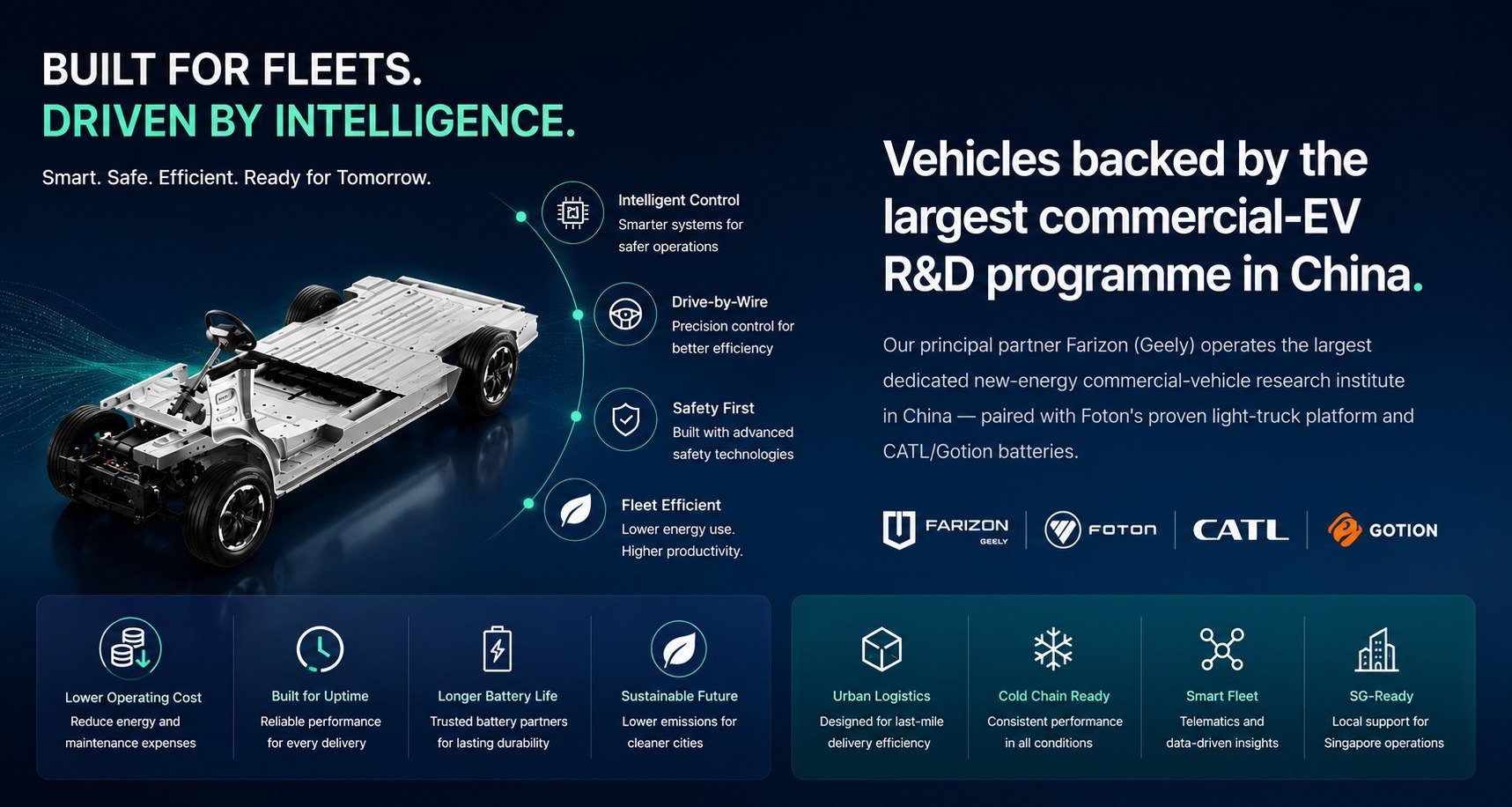
Fifteen manufacturers, compared on the same basis.
What we list
BYD, CRRC, Citroën, Farizon, Forland, Foton, Higer, JAC, Joylong, Maxus, Opel, Qingling, Riddara, Sany and SRM — 29 electric models available to Singapore fleets.
Vehicles are sourced through established Singapore dealers and distributors. We are not tied to a single marque, which is what lets us shortlist on duty cycle rather than on whatever we happen to hold.
How the specifications are compiled
Every figure on a vehicle page is taken from the manufacturer's own specification sheet — battery, range, payload, cargo volume, charging times and warranty terms.
Where a manufacturer publishes both city and combined range, both are shown. Where a figure is not published, the page says so rather than estimating. Specifications remain subject to homologation for Singapore LTA Vehicle Type Approval.
Transparent on revenue. Independent on advice.
We are asset-light — earning through agency commissions on vehicle sales, leasing referral fees, and first-month rental shares on successful conversions. We don't carry inventory risk, and we don't have an inventory to push.
That independence is the point. Our advisors are paid on customer outcomes — fleet electrification that actually lands on the road and stays on it — not on shifting a particular SKU.
Have a fleet electrification question?
Even at the early-exploration stage, a 20-minute conversation often saves months of guessing.